June 26, 2026
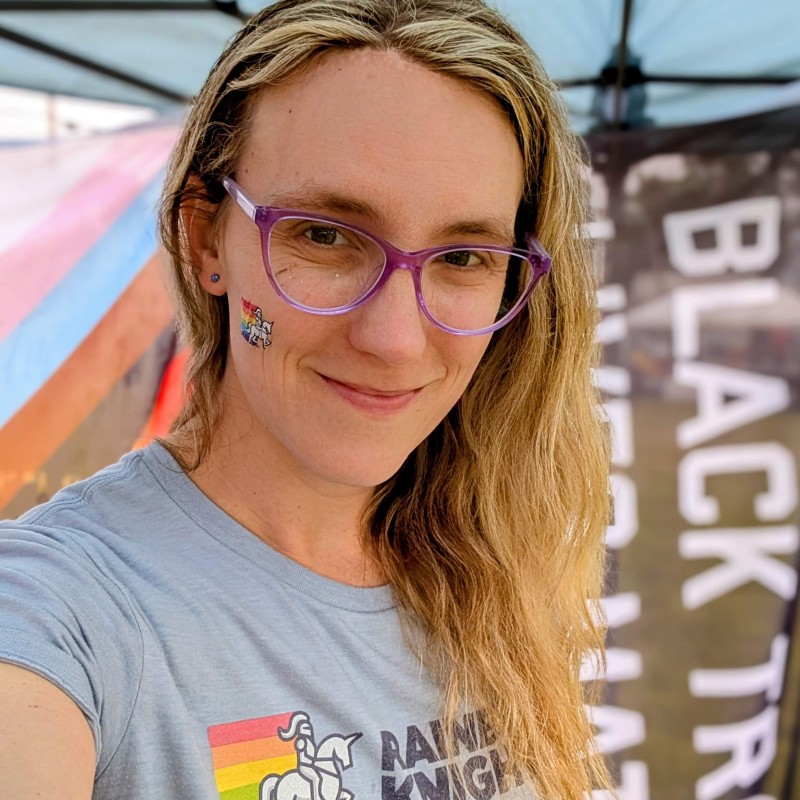
By: Piper Slowinski
If Not Us, Who? Building the Next Generation of Trans Leadership
When I first came out, I was one of the first trans people at my workplace and I was immediately faced with a stark reality: I was going to need to be the person to advocate for or create the supports that I needed in order to feel safe and supported there.
I would need to be the one to educate staff about pronouns and chosen names, holding their hands as they adjusted and learned to adapt. I would have to start a Queer & Trans affinity space to give myself a safe space in the workplace. I would need to develop the policies and practices around name changes and gender-affirming care. If not me, who?
And the more I looked around, I realized that this wasn’t an isolated case. The supports that existed out there for the Boston-areas trans community — the support groups, the Discord servers, the resource guides — were all created and maintained by other trans folks. We were the ones leading and spearheading all the efforts to support and advocate for our community.
This led me to a realization that has just grown over time: As trans people, we are frequently called or more often pushed or placed, into leadership positions in our personal and professional lives. It happens whether we want it or not, whether the spotlight is something we aspire towards or abhor. We are leaders because we need to be advocates for ourselves and community — if not us, who?
Over time, though, this kind of leadership is exhausting, lonely, and unsustainable. I was so proud of the progress I’d helped create at work — and the many baby trans folks that looked to me as a mentor — yet I was bleeding myself dry, trying to both manage my own transition while constantly advocating for change.
My experience speaks to a sad reality: Once in these leadership roles within communities and workplaces, trans people aren’t given the tools or support we need to succeed and thrive. We’re isolated, lacking a support system and network of other leaders like us that we can turn to for advice, help, and commiseration. Plus, leadership development opportunities and trainings are always designed for others, never for us.
As a result, we burn out — disappointing ourselves and others — but the problem does not lie within ourselves; it lies in the fact that we were set up for failure by being expected to be a leader without being supported in that role.
But it doesn’t have to be this way.
At YW Boston, we are working on building a new program to address this exact gap and need. Thanks to seed funding from The Boston Foundation’s Equality Fund, we are currently designing and piloting a cohort-based leadership program specifically by and for the Boston-area trans and gender-expansive community. And to ensure we hit the mark, we are building this program and curriculum in collaboration and partnership with many Boston-area queer and trans led organizations: the Massachusetts Transgender Political Coalition (MTPC), Trans Resistance MA, BAGLY, and many more.
This program will launch in 2027, and in the meantime, we will host a series of pilot events this year to test and refine the program’s concept and content. Later this year, you can expect to receive information from us about such events as: a trans community roundtable discussion with State Representative Sam Montaño; a half-day Trans Leadership Mini-Conference; and a Trans Networking Night.
Since transitioning, it’s been an ongoing process for me to figure out what my leadership looks like, how my trans identity impacts how my leadership and advocacy is perceived by others, and how I can sustain myself in this work for the long-haul. If these are questions you’d also love to explore, please join our mailing list to receive updates on the program and pilot events. You will be the first to hear about when registration for the events and applications for the program open!